Great Planetary: 2026!

Ravish Kumar
| 27-02-2026
 · Science Team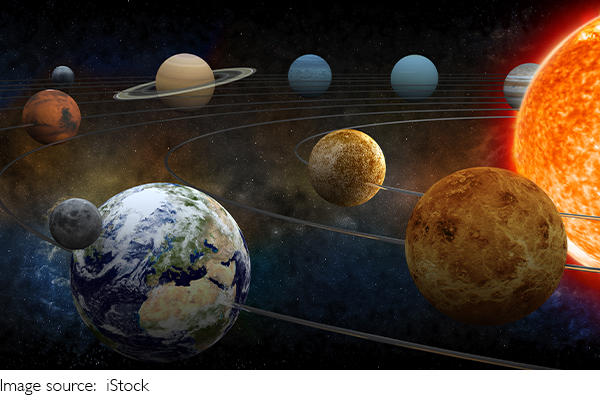
In 2026, skywatchers and astronomy enthusiasts have reason to look upward with excitement.
Among the year’s most remarkable celestial phenomena is an extended planetary alignment, often described as a “planet parade,” in which multiple planets in our solar system appear in a near‑straight line across the evening sky.
This event is not a dramatic straight‑line configuration in space — no such perfect line ever truly exists, but rather a vantage‑point illusion from Earth where several planets appear clustered along the ecliptic, the imaginary path the Sun takes across the sky.
What Exactly Is a Planetary Alignment?
A planetary alignment refers to a situation in which several planets orbiting the Sun appear to gather in a confined region of the sky when viewed from Earth. Because the planets orbit in roughly the same plane — the ecliptic, this optical convergence is possible and detectable without specialized equipment in some cases. These alignments do not imply that the planets are physically lined up in space, but rather that their positions project into a visually clustered pattern against the backdrop of stars.
From fierce defenders to quiet protectors, ranked by zodiac sign.
How renewable energy is driving next-gen hydrogen production.
Discover how stars are born, live, and die, and what scientists are learning.
Exploring the return of supersonic flight and the hurdles ahead.
Essential tips to help beginners pick the perfect camera for their needs.
Ever wondered how astronauts survive the harsh conditions of space?
Astronomers sometimes call this phenomenon a planet parade because it evokes a sequence of bright dots moving together across the evening sky. For 2026, the most anticipated sequence occurs over the late February period, culminating around February 28, when six planets appear in a broad alignment visible shortly after sunset.
The Six Planets of 2026’s Celestial Parade
The alignment that makes 2026 particularly interesting includes Mercury, Venus, Jupiter, Saturn, Uranus, and Neptune. Each of these worlds moves at a different speed along its orbit, but at certain times the geometry from Earth’s perspective causes them to gather along the ecliptic in a compact formation.
Here’s how these bodies will typically present themselves:
- Venus stands out as the brightest object in the alignment after the Moon, easily visible to the unaided eye as it hovers near the western horizon.
- Jupiter gleams steadily and is often one of the easiest planets to spot because of its high brightness and elevation in the sky.
- Saturn can also be seen without optics in many locations, though it appears less brilliant than Jupiter or Venus.
- Mercury adds a subtle challenge; its proximity to the Sun means it sets quickly after dusk and may be easy to miss without a clear horizon.
- Uranus and Neptune are fainter and generally require binoculars or a small telescope to be distinguished.
When and Where to Observe the 2026 Alignment
The highlight of this celestial configuration is centered around February 28, 2026, making late February an especially rewarding time for sky observation. On that evening, observers with unobstructed views toward the western and southwestern sky just after sunset will have the best opportunity to spot the planetary parade as it arcs across the horizon.
Unlike some alignments that require early morning hours before sunrise, this 2026 event unfolds conveniently in the evening, making it accessible to families and casual observers — provided the sky is clear and light pollution is limited.
Because the alignment spans many degrees of sky, the planets will not be tightly packed in one spot; instead, they trace a gentle curve as they reflect sunlight, following the ecliptic path. The precise timing and spacing can vary by geographic location, so local astronomical societies often provide tailored guidance to help observers plan their viewings.
Scientific and Cultural Significance
Celestial alignments like the one in 2026 hold both scientific and cultural appeal. Historically, such parades have helped astronomers refine models of planetary motion and assisted early scientists in understanding the mechanics of the solar system. Today they remain valuable observational opportunities that allow amateur astronomers to engage with planetary dynamics in real time.
From a scientific standpoint, observing multiple planets simultaneously can help illustrate how each world’s orbit intersects with human perspective — a daily reminder of the dynamic nature of our solar system. Unlike eclipses, which are brief and dramatic, the slow shifting of a planetary alignment offers a more gradual and contemplative encounter with celestial mechanics.
Viewing Tips for Enthusiasts
For those planning to observe the alignment, preparation enhances the experience. Finding a location with a clear and low western horizon is key, since Mercury and Venus will be closest to the sunset. Starting observation about 30–60 minutes after sunset maximizes the chances of seeing the full lineup before the planets set.
Using sky map apps or star charts can help identify planets more confidently, especially for the dimmer outer worlds. Binoculars or a small telescope will bring out Uranus and Neptune, and even reveal subtle differences in brightness and color that are not obvious to the unaided eye.
Beyond 2026: A Continuum of Celestial Wonders
While the 2026 planetary alignment offers a rare and delightful spectacle, it is part of a continuing cycle of astronomical events that change slowly but consistently over years and decades. Alignments of multiple planets — especially involving four or more — are uncommon and create memorable opportunities for public engagement with astronomy. They remind us that Earth is not static, but part of a living solar system in motion.
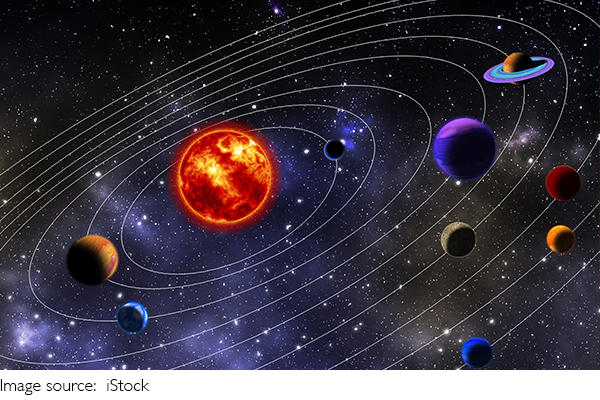
As February nights draw near that remarkable sky parade, enthusiasts from novices to seasoned astronomers will find themselves drawn to the heavens — ready to witness a cosmic gathering that promises beauty, wonder, and a renewed connection to the celestial rhythms that have fascinated humanity since antiquity.