Khaki Campbell Ducks

Amit Sharma
| 25-06-2026
 · Animal Team
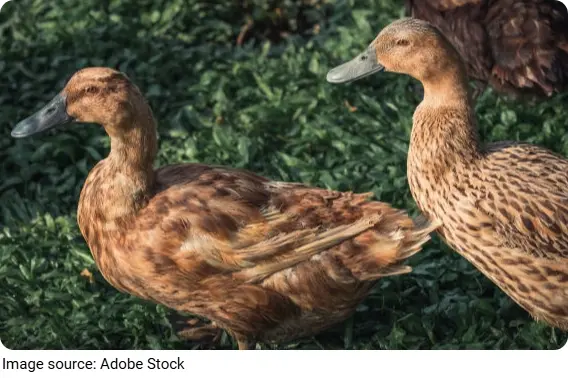
Hi, Lykkers! If you think chickens are the only practical choice for a backyard flock, it might be time to meet the Khaki Campbell duck. Known for their remarkable egg-laying ability, these ducks can produce more eggs each year than many traditional chicken breeds.
They are also calm, hardy, and relatively easy to care for, making them a favorite among small-scale farmers and backyard keepers. With their friendly nature and dependable productivity, it's easy to see why Khaki Campbells have earned such a loyal following.
A Breed Designed for Productivity
The Khaki Campbell did not appear by accident. The breed was developed in Gloucestershire, England, by breeder Adele Campbell during the late nineteenth century. Her goal was to create a duck that could provide a reliable supply of eggs while still producing a respectable table bird.
Why Do Leopards Choose Trees Over the Ground? The Surprising Reasons Behind Their Perfect Resting Strategy!
From Tiny Cub to Silent Ruler: How a Tiger Grows, Learns, and Rules the Wild World Step by Step, Life Unfolded?
How Do Newborn Tiger Cubs Find Their Mother Without Sight? Survival Secrets of Early Life Revealed! - Nature Explained!!
They plunge several meters underwater for a surprising reason!
How to Keep Your Cat Clean, Healthy, and Happy Every Day
How white-tailed deer communicate, survive, and thrive in the wild
By crossing Indian Runner ducks, known for their remarkable laying ability, with larger breeds such as the Rouen, she succeeded in producing a duck that could lay close to 300 eggs annually under good conditions. Even today, that figure rivals or exceeds many popular chicken breeds. Unlike ornamental ducks, Khaki Campbells were developed with utility in mind. Mature birds typically reach around four to four and a half pounds, making them suitable for both egg and meat production without requiring excessive feed.

Raising Ducklings Successfully
The first few weeks are the most important stage in a duck's life. Newly arrived ducklings should be placed in a secure brooder with dry bedding, constant access to clean water, and a reliable heat source. A simple plastic wading pool or livestock tub often works well because it is easy to clean and prevents drafts.
Unlike chicks, ducklings instinctively play with water. They need enough depth to dip their entire bill, which helps keep their nostrils and eyes clean. However, deep swimming water should be avoided during the earliest weeks because their natural waterproofing is not fully developed.
Feeding is equally straightforward. Most keepers start with an unmedicated starter ration, since medicated feeds designed for chickens may not always be appropriate for waterfowl. Fresh greens, chopped vegetables, and small insects can gradually become part of the diet as the ducklings grow. Gentle daily handling also pays dividends. Ducks that regularly interact with people from an early age tend to remain calmer and easier to manage throughout adulthood.
Simple Housing, Happier Ducks
One of the advantages of keeping Khaki Campbells is that they require relatively uncomplicated housing. Unlike chickens, they do not seek elevated roosts and are content sleeping on clean, dry bedding at ground level.
Protection from predators is far more important than elaborate construction. A sturdy coop combined with a secure fenced run provides enough shelter for most backyard flocks. Many owners also use movable pens, allowing the ducks to graze fresh patches of grass while naturally fertilizing the ground. Although ducks love splashing in water, they do not need a large pond to stay healthy. A shallow basin or children's pool is often enough to satisfy their instincts and encourage natural behaviors.
Natural Foragers With Healthy Appetites
Khaki Campbells are energetic foragers. They spend much of the day searching for insects, snails, slugs, and tender weeds, making them valuable helpers around gardens and orchards.
Their appetite for pests can reduce the number of unwanted insects without the need for chemical treatments. A balanced commercial feed should still form the foundation of their nutrition, but kitchen vegetable trimmings and garden greens can provide useful variety. During the laying season, an additional calcium source is important to maintain strong eggshell quality. Crushed baked eggshells or oyster shell supplements are commonly used by experienced keepers. Clean drinking water should always be available. Ducks consume more water than chickens because they repeatedly rinse their bills while eating.
The Remarkable Quality of Duck Eggs
People often begin raising Khaki Campbells for quantity, but many stay because of quality. Their eggs are slightly larger than standard chicken eggs and contain rich yolks that many bakers prefer.
The higher proportion of albumen gives cakes and pastries extra structure, while the richer yolk contributes to a smooth texture in custards and other baked dishes. Professional bakers and culinary enthusiasts have long valued duck eggs for these qualities. Despite their incredible laying ability, Khaki Campbell hens rarely become broody. Those wishing to hatch future generations often rely on incubators or use more maternal duck breeds to raise the young.
Why They Fit Modern Backyard Life
For people living in suburban or semi-rural neighborhoods, Khaki Campbells offer practical advantages beyond egg baskets. Drakes do not produce the loud crow associated with roosters, and the breed is generally quieter than many chicken flocks. Daily care is also surprisingly manageable. Feeding, watering, moving a portable run, and collecting eggs can usually be completed in less than half an hour. Routine cleaning every few weeks keeps the housing fresh and comfortable. Their combination of efficiency, adaptability, and entertaining behavior makes them a rewarding addition to small homesteads where space and time may be limited.
Khaki Campbell ducks prove that productive livestock does not have to be difficult to manage. They provide an impressive number of eggs, grow into useful table birds, and naturally contribute to pest control around the yard. At the same time, their playful habits and constant curiosity bring life to any backyard.